Until the Rules Changed
Unpublished manuscript · representation enquiries welcome
Unpublished manuscript · representation enquiries welcome
Alex Seton, For Every Drop Shed in Anguish (2020–2023), Australian War Memorial. Photograph: Graham Robinson, February 2026.
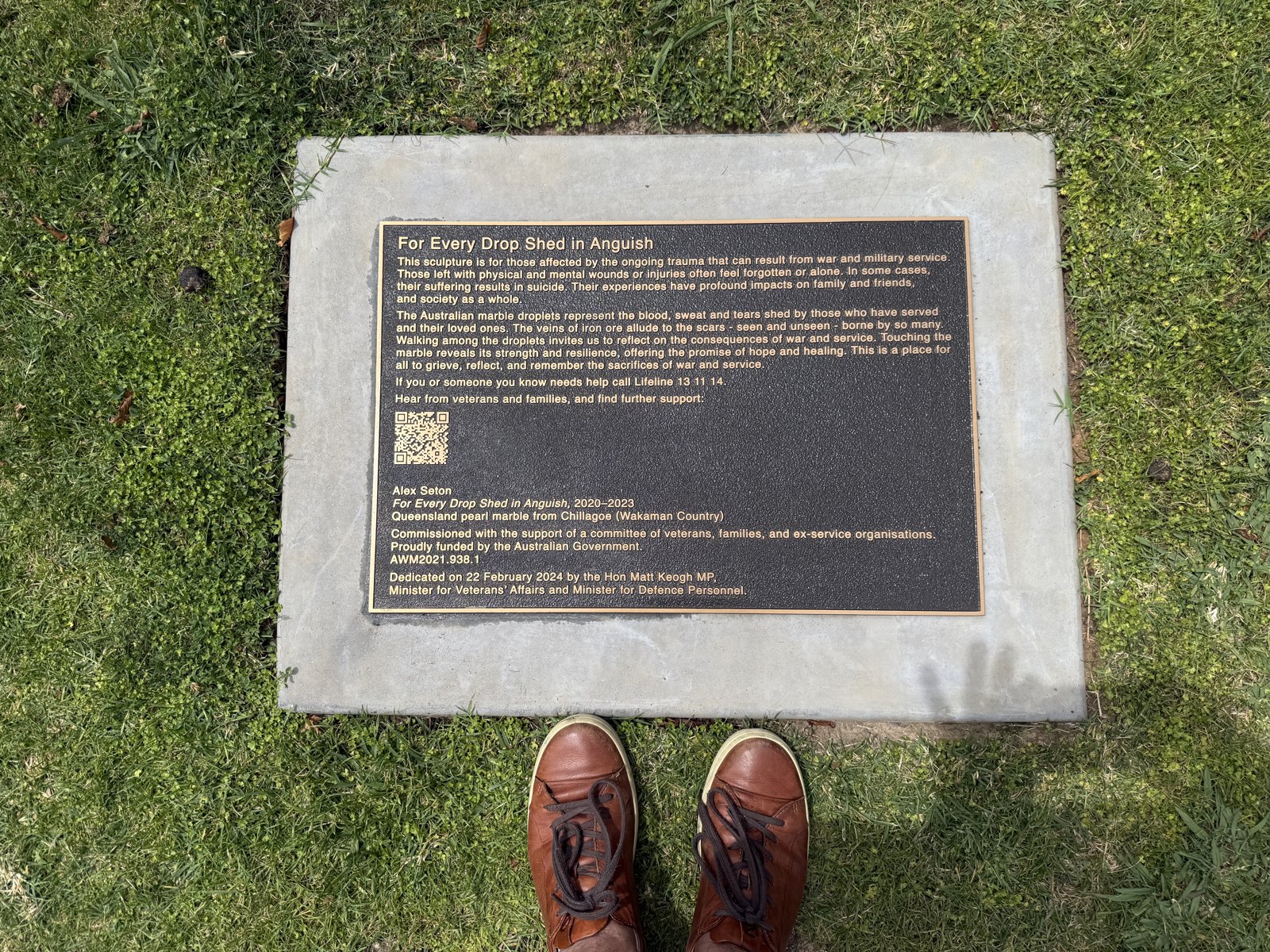
The Australian War Memorial, Canberra, February 2026. Three weeks on the road, driving through the geography of his own Australian life, with the marble droplets as the place where the drive turned. He sat. He lingered. He laid a hand on each one. He wept. After about twenty minutes he left, and he was lighter than when he arrived.
Australian War Memorial · February 2026
A working-class Belfast-Irish boy is carried across the world by his father’s football, formed by a household where there was no safe move, and handed at sixteen and a half to the Royal Australian Navy — which formed him further and damaged him in ways the country had no category for. He carried that weight, unnamed, for fifty years.
The book is the story of how the rules finally changed — the institutional apology, the compensation, a sculpture of marble tears at the Australian War Memorial — so that he could lay his hand on the stone and tell it the truth, and of what he was while they were changing.
It is the slaying of Sisyphus: the man who finally stops rolling the rock.
There is a place at the Australian War Memorial in Canberra where, since February 2024, two dozen marble droplets sit on grass under plane trees.
They are tears made permanent. The stone is Queensland pearl marble from Chillagoe, on Wakaman Country. The plaque says the veins of iron in it are the scars — seen and unseen — borne by so many. The sculpture, by the artist Alex Seton, is called For Every Drop Shed in Anguish.
In February 2026 I was sixty-six and in the middle of the longest drive of my life. I had left Port Douglas in mid-January with no fixed date to come home. I was not driving to Canberra. I was driving through the geography of my own Australian life, and Canberra was a stop on the way.
At the Memorial I had lunch with two tour guides — Bob, and then Barbara. They heard my story. I wanted to tell it, and they listened. Barbara directed me to Alex Seton’s marble droplets in the Sculpture Garden.
I sat. I lingered. I laid a hand on each one. I wept. After about twenty minutes I left, and I was lighter than when I arrived.
It took me until I was sixty-six to put my hand on that stone.
I had been carrying the weight of it for fifty years. I had not been allowed to call it weight, because what had been done to me did not qualify by the rules of the time. I had not been in a war. I had not seen combat. By the rules of the country I grew up in, what I was carrying did not qualify for stone.
I had to wait for the rules to change before I could lay my hand on the rock and tell it the truth.
This book is the story of how the rules changed, and of what I was while they were changing.
Act One · Prologue
“The me I was, the me that wasn’t known by me but the me I was — not the me I became through all the acts or deaths of my life.”Act One · Chapter Seven
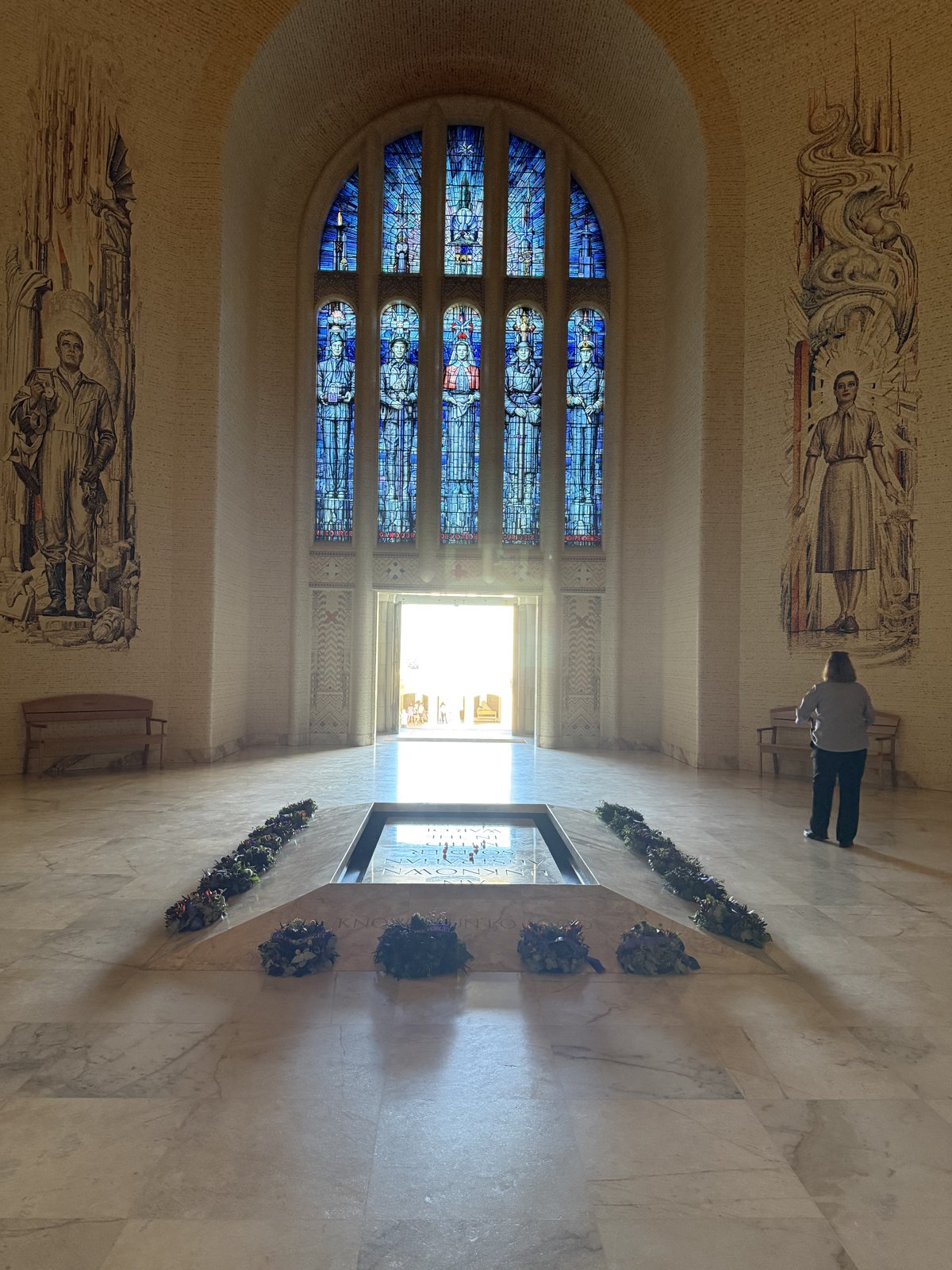
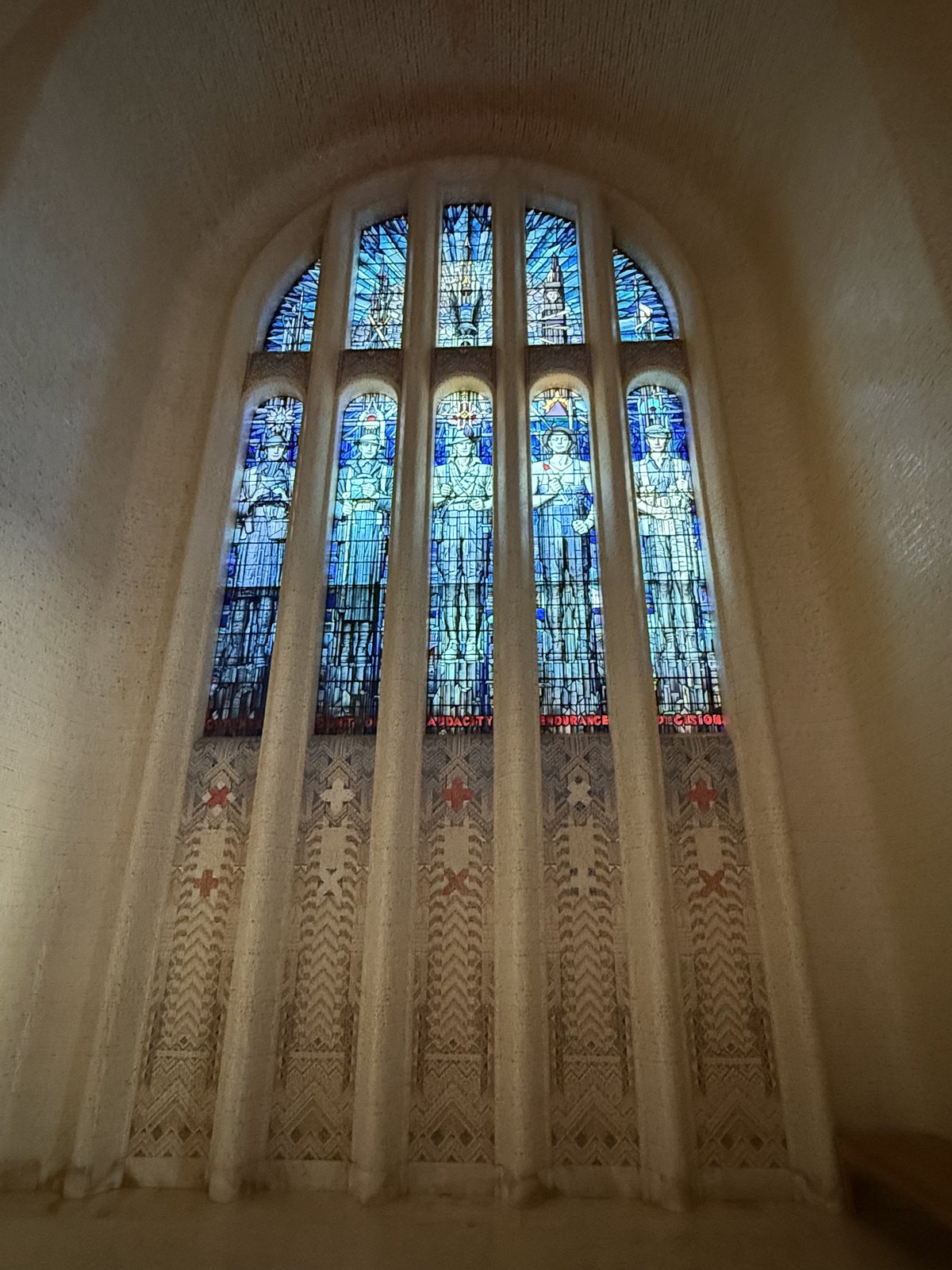
The book’s closing arc is set at the Australian War Memorial in Canberra. The Hall of Memory, the Roll of Honour, the Sculpture Garden — and Alex Seton’s For Every Drop Shed in Anguish.
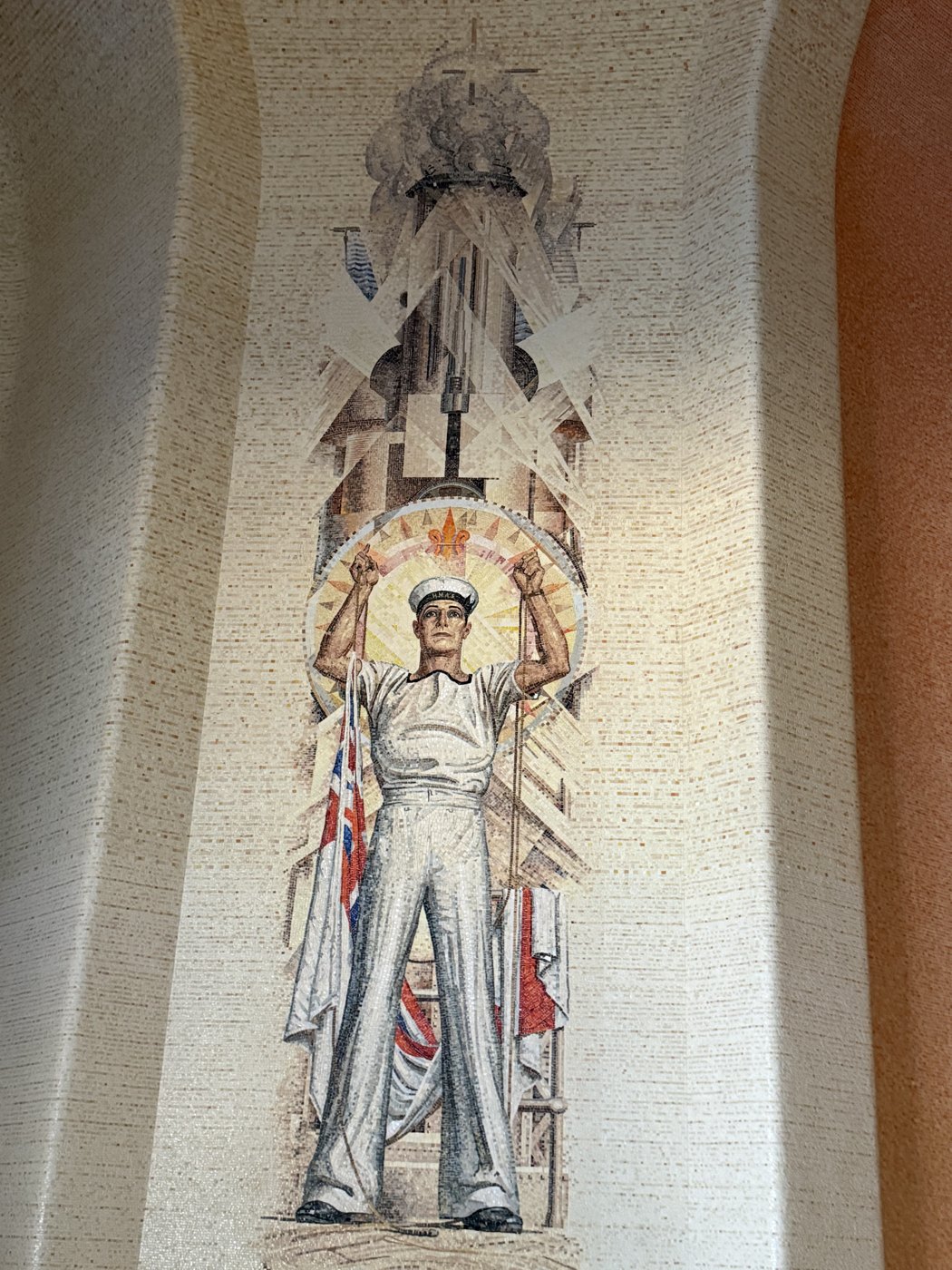
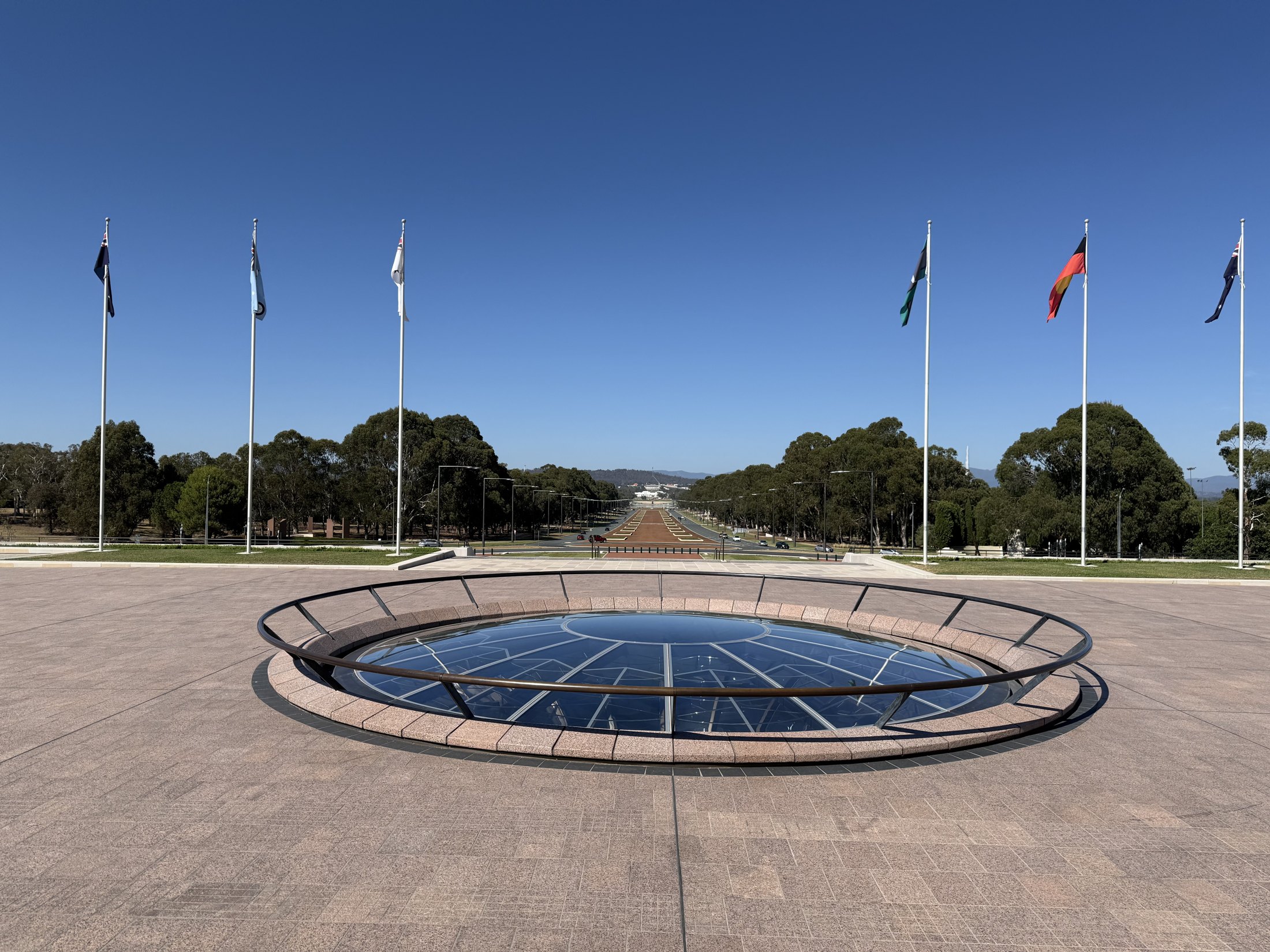
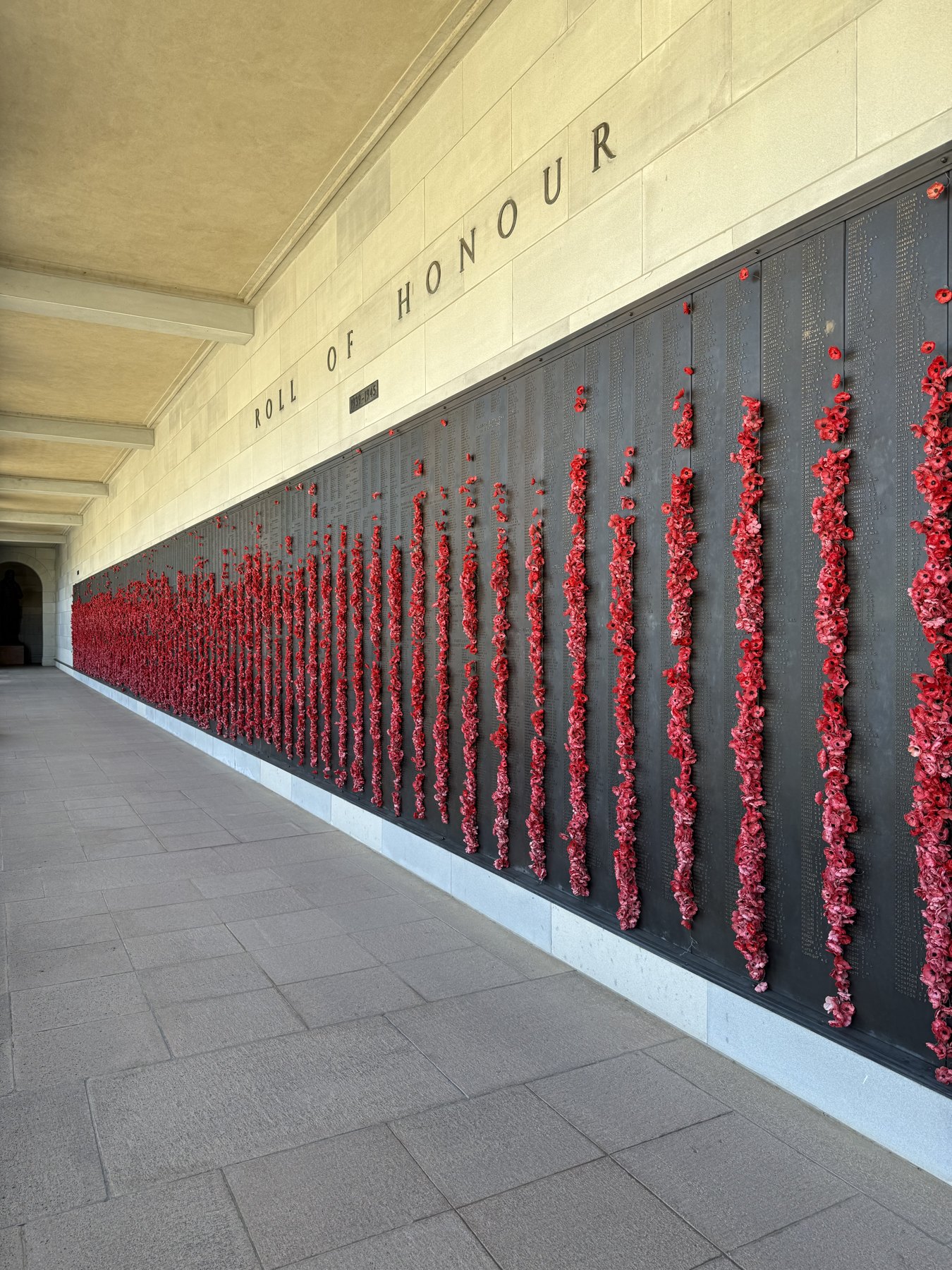
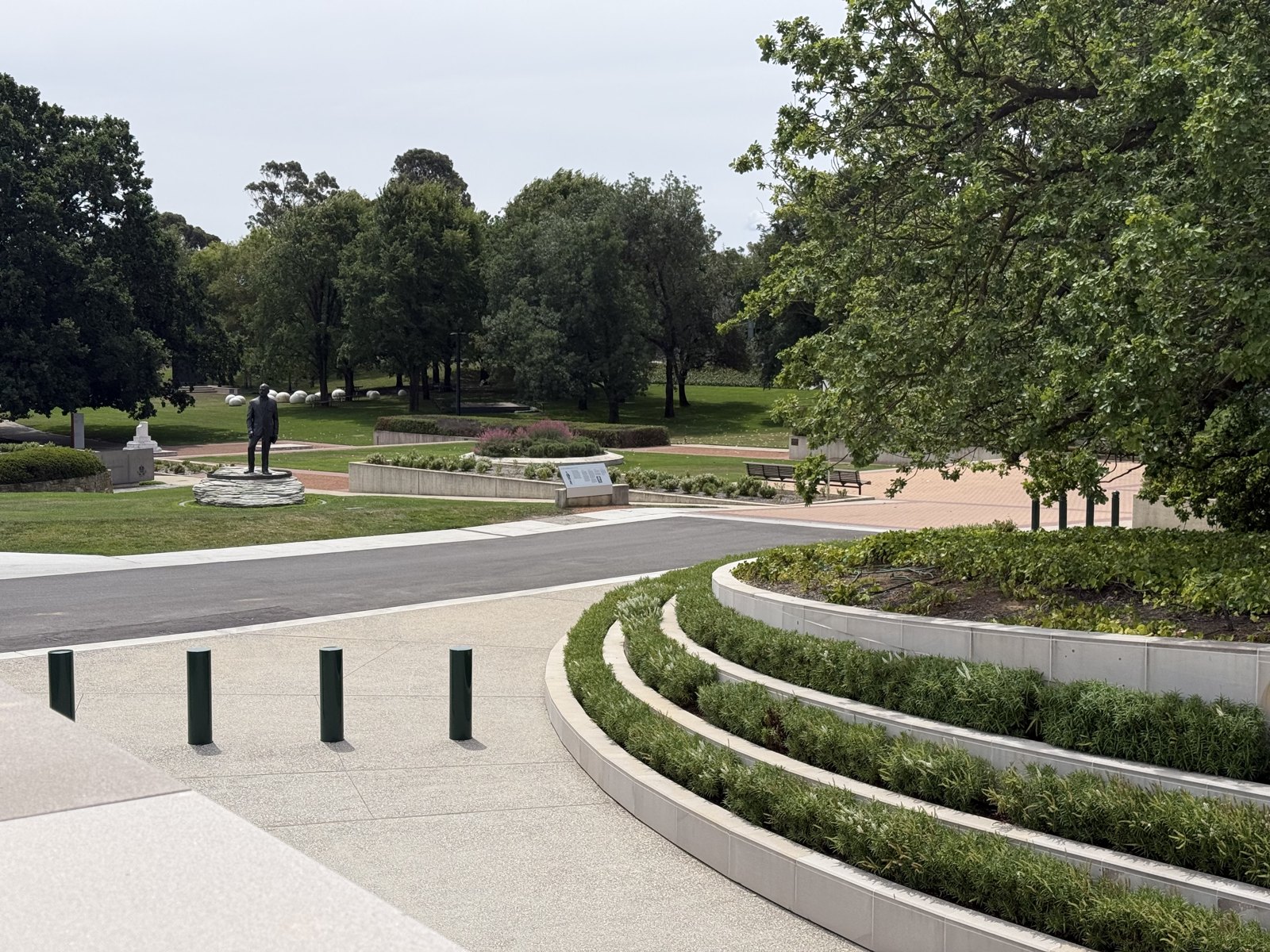
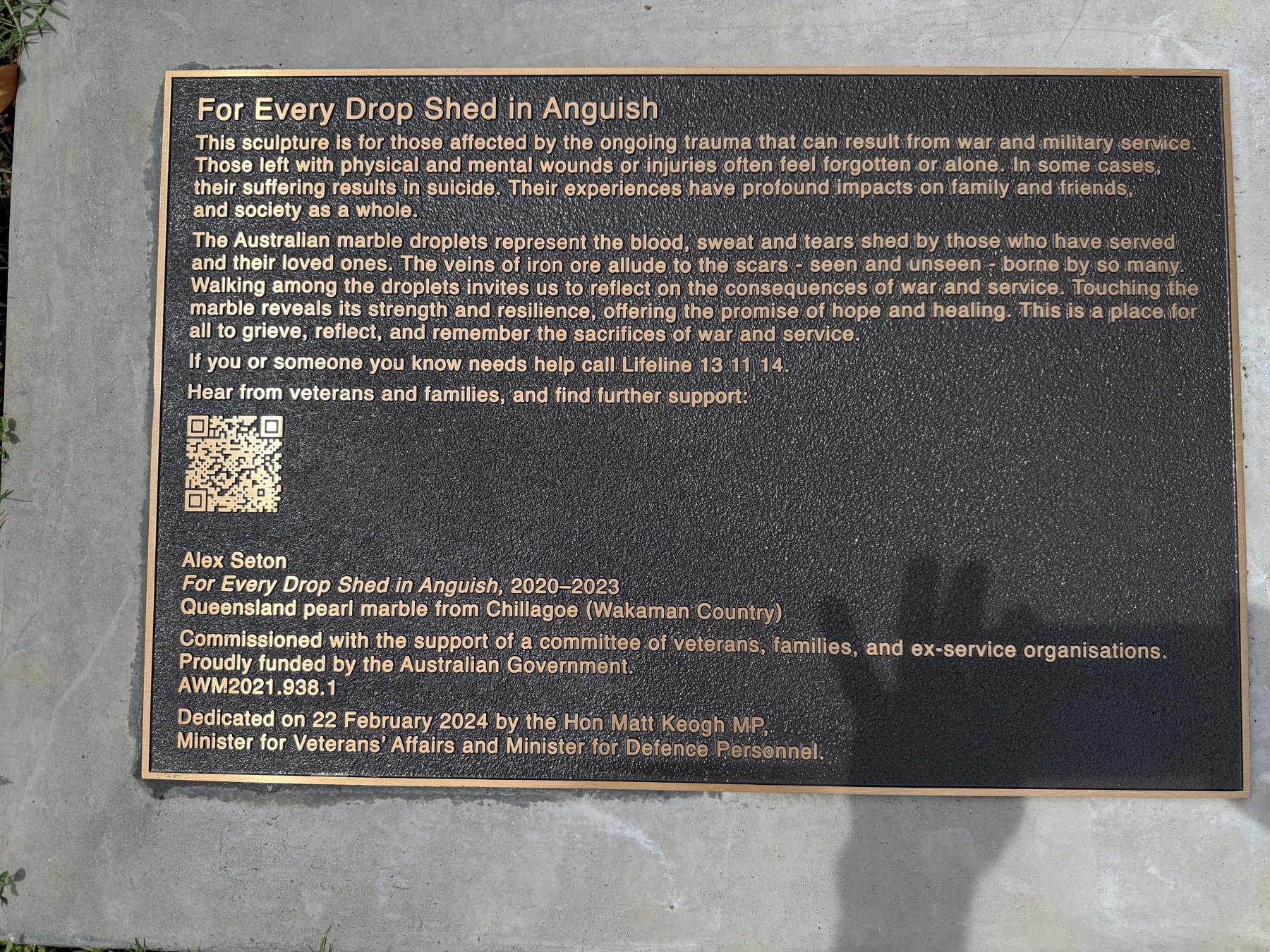
The Australian marble droplets represent the blood, sweat and tears shed by those who have served and their loved ones. The veins of iron ore allude to the scars — seen and unseen — borne by so many. Walking among the droplets invites us to reflect on the consequences of war and service. Touching the marble reveals its strength and resilience, offering the promise of hope and healing. This is a place for all to grieve, reflect, and remember the sacrifices of war and service.
Alex Seton, For Every Drop Shed in Anguish, 2020–2023 · Queensland pearl marble from Chillagoe (Wakaman Country) · Dedicated 22 February 2024 · AWM2021.938.1
Graham Robinson was born in Belfast on 26 April 1960. In March 1968 his father, the Irish League and Fulham footballer Harry Robinson, emigrated the family to Australia — Sydney, Port Augusta, New Norfolk, Whyalla, and Port Augusta again.
At sixteen and a half he entered the Royal Australian Navy at HMAS Leeuwin, in October 1976. He served until 1983. He carried what happened to him in those years for the next five decades. He received the formal Navy apology in April 2023. In February 2026, on the longest drive of his life, he laid his hand on the marble droplets at the Australian War Memorial in Canberra.
He is writing the book now.
People look at me, listen to me, watch me — and wonder what I am.The author
I am the outlier. Always have been.
Ladies and gentlemen: I am the product of a life lived. My life. And I survived it.
Five institutional acknowledgments stand behind the book. They are matters of public record.
The claim was lodged, represented and won.
“The appallingly poor behaviour you experienced has caused lasting harm. Senior officers in a position of authority took no action, and effectively abrogated their duty of care towards you. The opportunity to apologise to you has come very late.”
Two dozen Queensland pearl marble droplets — tears made permanent — on grass under plane trees at the AWM in Canberra.
“As children, you deserved care and protection. We say we believe you. What happened was not your fault.”
A number of service-connected conditions accepted by the DVA.
A literary memoir for the trade market. Three acts. Australian-Irish working-class voice. Australian setting, with chapters set in Belfast, Sydney, Port Augusta, New Norfolk, Whyalla, Western Australia and Canberra.
Agents, publishers and journalists are warmly invited to make contact.
graham@untiltheruleschanged.com